
About
Nasawiyyah: Arab Media History presents exhibits featuring writings and digitized archival records around the lives and ideas of Arab women media workers from the 20th century through anti-colonial feminist perspective, situating contemporary uses of feminist and digital media activism in a longer history. Explore our curated exhibits here.
Arab feminists (Nasawiyyat) have played a central role in the development of Arab media and anti-colonial nationalist consciousness. Despite this fact, little is known amongst general audiences about the rich legacy of Arab women’s contributions to Arabic mass-media culture. Nasawiyyah: Arab Media History addresses this problem by illuminating Arab women’s revolutionary feminist ideas and media productions from the 20th century to contemporary Arabic and English-speaking internet audiences. In an environment in which Zionism and “global and local” imperialism still dominates the communications media landscape, this resource is created to inform and inspire contemporary media workers, students, and general audiences who are interested in learning about how 20th century Nasawiyyat used media to combat patriarchal and colonial oppression.
Arab feminists have for-long advocated for the need for us to use and create media as a means to serve the People. By learning our resistant feminist histories and studying women’s media, as presented in their own words and in the context of their lives experiences, we are better equipped to use media creatively and dissidently to implant and cultivate “the seeds of revolution in the hearts of the oppressed” (Nawal el-Saadawi, 1982).
Nasawiyyah: Arab Media History heeds the call of Arab feminist scholars and media workers who have for over a century theorized on the significance of resistant mass-media and literature (adab) in mobilizing and serving the needs of society.
Nasawiyyah: Arab Media History considers the history of Arab media as a feminist Nasawsiyyah history, rejecting masculinist and colonial segmentation of Arab women’s ideas as only related to “women’s issues”.
Nasawiyyah: Arab Media History considers literature and literary ideas as an integral part of the history of Arab media, while upholding a collectivist understanding of Arab nationalism and media history, rather than a “monopolized” history that follows the stories set by patriarchal state actors.
Nasawiyyah: Arab Media History engages with the ideas of Arab feminist media workers in a way that refuses orientalist myths around Arab women’s lives.

Meet the Team
Dr. Mariam Karim
Founder

Dr. Mariam Karim is a Lebanese-Iraqi Global Postdoctoral Scholar at the Institute for Advanced Study in the Global South at Northwestern University in Qatar (#IAS_NUQ) and the Founder of Nasawiyyah: Arab Media History. She is a member of the Steering Council of the Archives & Digital Media Lab where she also serves as a Feminist Histories & Archival Fellow.
Karim completed her PhD at the University of Toronto’s Faculty of Information (iSchool) and the Women and Gender Studies Institute (WGSI). She served as an inaugural graduate fellow at the University of Toronto's Critical Digital Humanities Initiative (CDHI) and was the recipient of the Social Science and Humanities Research Council (SSHRC) doctoral award. She holds an Honours BA in Visual Culture & Communications from the University of Toronto and a MA in Cultural Studies & Critical Theory from McMaster University.
Her research agenda explores Arab Feminist Media from the 20th century. She situates contemporary uses of digital media through historical inquiry and studies Arabic mass-media in the context of media imperialism and colonialism. To do this, she follows Arab women’s expansive mass-media practices, contributions, and ideas from the 20th century as central points of reference. Read her articles in Communication, Culture & Critique and First Monday.
Media Production & Research Assistants

Maryam Al-Mohammed (2024-2026)
Maryam is a filmmaker and media researcher based in Qatar whose practice bridges creative production and critical inquiry. Her work foregrounds women’s lived experiences, interrogating structures of autonomy, power, and representation across shifting cultural landscapes. She earned her degree in Communications from Northwestern University in Qatar.
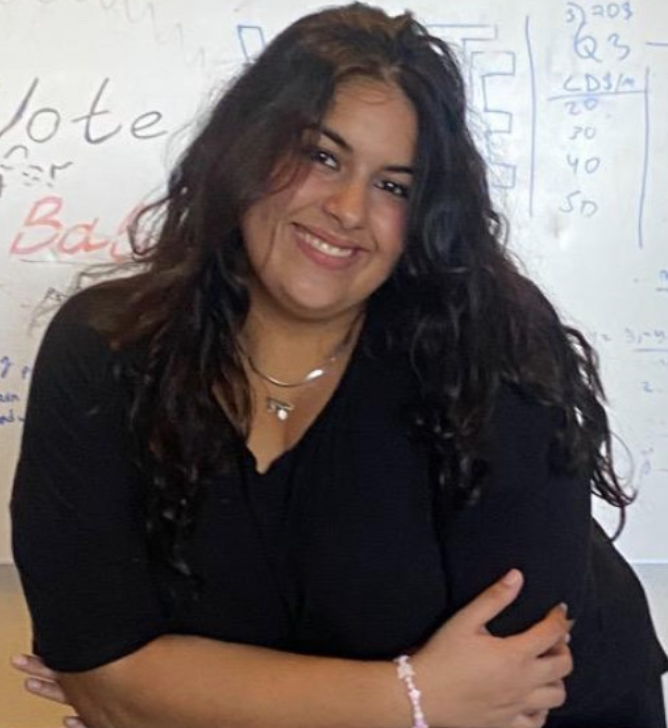
Lina Jaafar (2025-2026)
Lina is a second year Journalism and Strategic Communication Moroccan student at Northwestern University in Qatar, with minors in Africana Studies and Media & Politics. She is the co-creator and editor of NU-Q’s first student zine, The Zine, a publication dedicated to amplifying creative and critical student voices. Doing translation and social media work for Nasawiyyah, she seeks to build different ways of retelling the stories of Arab feminist revolutionaries. Lina is passionate about research-driven storytelling, alternative media in the Middle East and North Africa, and projects that center culture, youth, and identity. She aspires to produce journalism that is both intellectually rigorous and socially impactful.
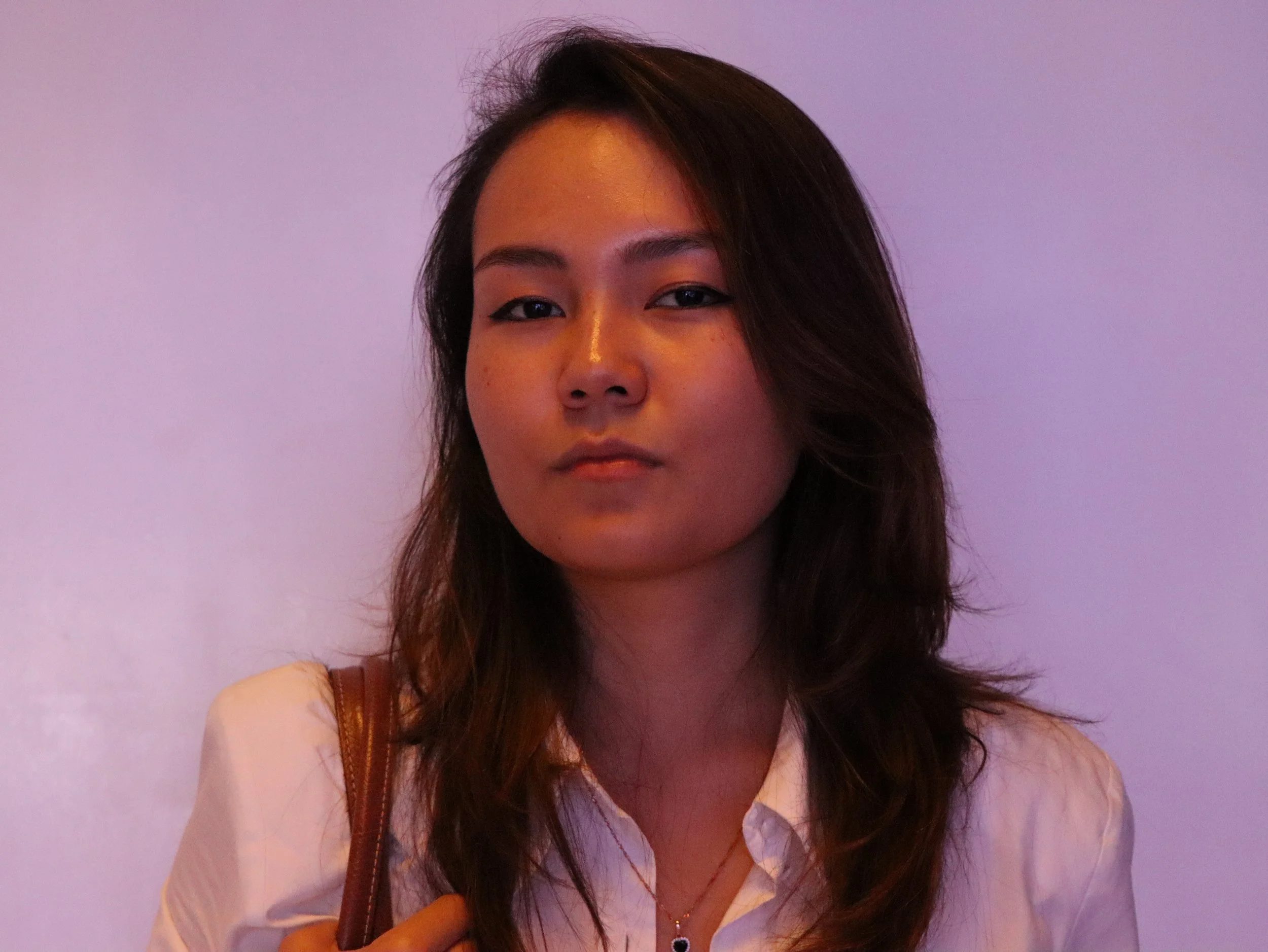
Tomiris Tutkabayeva (2025-2026)
Tomiris is a first-year international student at Northwestern University in Qatar and serves as a Production Assistant for Nasawiyyah. Drawing on her marketing and production experience in Kazakhstan and Qatar, she brings a production-focused perspective, highlighting feminist media histories from a Central Asian context. Tomiris works as a Marketing Specialist at the Qatar Science and Technology Park. She also completed an Ambassador Internship with the International Model United Nations Conference in the Philippines, where she participated in policy-focused discussions within a UN-style simulation. Her academic and professional interests center on strategic communications and journalism.

Omar Al-Saadi (2024-2025)

Taniya Tleubayeva (2024-2026)
This project is produced with support from the Institute for Advanced Study in the Global South at Northwestern University in Qatar (#IAS_NUQ).

Taniya is a video editor and a sound specialist based in Qatar. She graduated from Northwestern University in Qatar with a major in Media Industries and Technology and a minor in Film and Design.